The rescue of Kinmont Willie
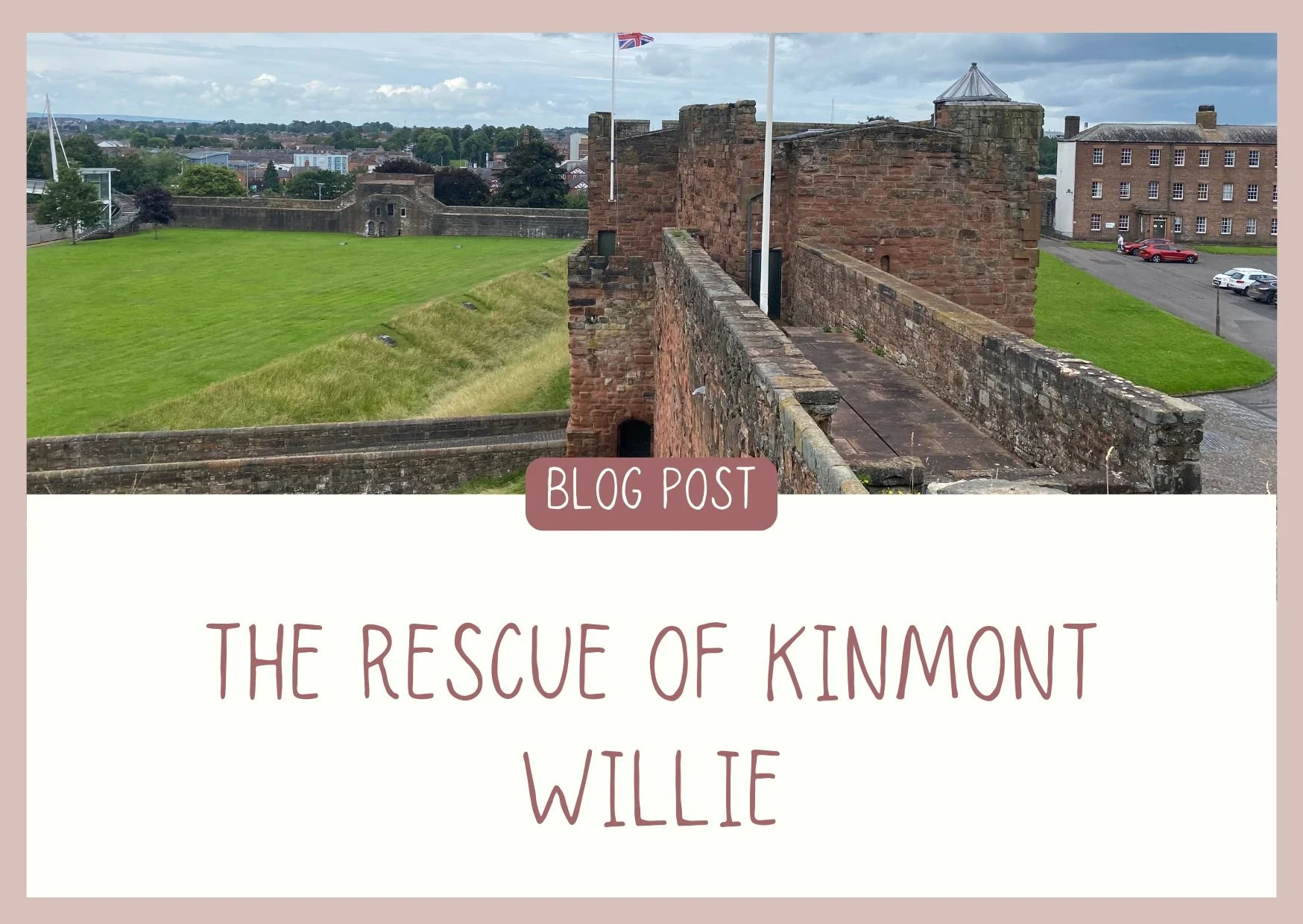
The rivalry between Scotland and its southern neighbour is well known. Today, this rivalry plays out in sports and discussions about whether Berwick-upon-Tweed is Scottish or English. But once this rivalry was a matter of life and death.
For three centuries, tensions on the Anglo-Scottish border were never far from boiling over. Even when Scotland and England were at peace, raiding into the other country was common. These border reivers, as they became known, raided across the debatable land without fear.
The most famous of these border reivers was Kinmont Willie Armstrong, whose 16th-century rescue from Carlisle Castle was the stuff of legend.
Who were the Border Reivers?
The Anglo-Scottish border had long been contested. It was only 100 years before that Berwick changed hands for the final time. Despite the border remaining stable over the 100 years since Berwick changed hands for the final time, the tensions and rivalries remained.
The border was split into three on both sides: West, Middle and East Marches. Each march had an English and Scottish keeper that was bound to work with their counterpart to keep peace in the area. That was the expectation, at least. The reality was much different.
The Marcher Lords often had to balance loyalty to the Crown with loyalty to their people. They were surrounded by tough, war-ready landowners who raided across the border frequently. These border reivers (from the Old English reafian meaning to rob or plunder) created a whole subculture based on kin, loyalty and Border Law.
Border reiver families
The most notorious border reiver family was the Armstrongs. They were a Cumbrian family who had risen to prominence during the reign of David I when Cumbria had been part of Scotland.
Through the sixteenth century, the Armstrongs had built a powerful base and great wealth that threatened the Scottish monarchy. King James V, already under pressure to put an end to the border raids, invited Johnnie Armstrong to join the King’s hunting party. Before they reached Carlinrigg, the King’s men ambushed the Armstrongs, arrested them and hanged them from trees.
Despite hanging a large number of Armstrong men, this didn’t dismantle the clan or stop their activities. Fifty years later, another Armstrong would be bothering the monarchs on both sides of the border. This was William Armstrong of Kinmont.
Kinmont Willie
Born around 1550, Kinmont Willie would first come to the attention of the authorities in 1569, when he reputedly killed Uswold Dod and stole 800 cattle and 1,000 sheep. By 1583, Lord Scrope, 10th Baron Scrope, the warden of the English West Marches, had petitioned his counterpart in Scotland to hand Kinmont Willie over on the charge of murdering 600 people and stealing thousands of livestock.
From that moment, Kinmont Willie was a wanted man on the English side of the border.
The truce day, 17 March 1596
Days of truce were a common occurrence. On these days, authorities from both sides of the border would meet to discuss their common interest and hold trials of those arrested for breaking Border Law. Everyone who attended a truce day was protected by safe conduct. It ran from dawn on the day of the truce to dawn the day after. This would allow people to attend the court and get home safely again.
Kinmont Willie had been summoned to sit on the jury of the court and attended as instructed. Once the proceedings were over, he and his men were riding back along the Liddell Water on the north bank. A contingent of soldiers under the command of Thomas Salkeld, deputy Warden of the West March were riding on the other side. Sure that he was protected by the safe conduct, Kinmont Willie paid them little heed.
But, he was a wanted man, and the Englishmen were not about to let him escape. They were under the impression that the truce had ended at sunset, as they sometimes did when there were not many affairs for the authorities to cover. They crossed the river and chased Kinmont Willie’s party until they overcame them and arrested Kinmont Willie. He was taken to Carlisle Castle in chains.
Salkeld’s commander, Lord Thomas Scrope, 10th Baron Scrope, was thrilled with the capture of Kinmont Willie. He’d been trying to arrest Kinmont Willie for over a decade at that point. But the reaction on the Scottish side of the border was not so positive.
Lord Scrope’s counterpart on the Scottish side was Walter Scott of Buccleuch, the Keeper of Liddesdale, who earned the nickname ‘the Bold Buccleuch’ after his rescue of Kinmont Willie. Buccleuch protested to Scrope that his men had broken the truce and demanded that Kinmont Willie be returned to Scotland.
Scrope was not sure what to do and wrote to Queen Elizabeth I to ask for advice. He didn’t receive a reply, so Scrope decided to keep Kinmont Willie imprisoned until he’d heard back from his monarch.
The raid on Carlisle Castle, 13 April 1596
Buccleuch wasn’t willing to wait on the orders of the English Queen. Raising a party of men, mostly Armstrongs, Scotts, Grahams and Bells, which numbered around 70 to 80, Buccleuch set off for Carlisle Castle. Leaving men at Scots Dyke and the Staneshaw Bank to harass any pursuers, Buccleuch rode on. Having crossed the River Eden unchallenged, it was only a short way to Carlisle
How the party of Scots gained entry into Carlisle is subject to debate. The more romantic tales say that the men scaled the castle walls while the guards took shelter from the horrendous weather. It does seem that the guards didn't pose much resistance, but it’s more likely that Buccleuch had help from within the castle.
Reiver History believes that Thomas Carleton or his men let Buccleuch’s men into the castle. Carleton and Scrope had a vicious rivalry, and Carleton was more than happy to help Buccleuch free Kinmont Willie.
Carleton’s men were not the only ones who helped the Scots. The day before the raid, a member of the garrison had told a Graham where Kinmont Willie was being held. This meant that Buccleuch’s men could head straight for that location once they were in the castle.
Having freed Kinmont Willie, the Scots returned to Scotland. According to the Border Ballad, Kinmont Willie, the Scots party were chased by the 1,000 men from the garrison to the Staneshaw Bank where they decided not to swim across like the Scots. While this is a good story, there’s little to back up this chase.
The reaction
The daring rescue nearly caused the Anglo-Scottish border tensions to spill into open war. Lord Scrope led a raid into Scotland, destroying Annan and Dumfries. He’d also written to Elizabeht I to tell her that 500 men had attacked Carlisle Castle, an estimate far higher than the probable 70 to 80 men that did set off for Carlisle on 13 April 1596.
Elizabeth I was furious that one of her border castles had been raided during a time of peace. She demanded that James VI of Scotland send Buccleuch to her for punishment.
James was stuck between a rock and a hard place. He was aware of how the Scots felt about the arrest of Kinmont Willie, but he was reluctant to anger Elizabeth. In 1586, she had promised him a pension of £4,000 a year and the throne upon her death. James was genuinely concerned that this event would derail him becoming King of England.
Buccleuch was warded in Berwick for sanctioning this raid. Elizabeth eventually forgave him. Buccleuch and Elizabeth would meet when Buccleuch was on his way to fight the Spanish. She asked him how he dared to conduct such a raid, and he apparently responded, ‘What is it that a man dare not do?’ Elizabeth is said to have turned to her courtiers and said, ‘with ten thousand such men, our brother in Scotland might shake the firmest throne in Europe.’
The Union of Crowns and the end of the Border Reivers?
Outright war didn’t break out, although, as the English Ambassador to Scotland pointed out, the two countries had gone to war for less. James and Elizabeth maintained their relationship, and James did inherit the English throne in 1603.
With one monarch ruling, both countries saw a decrease in the worst of the border reiving, although it didn’t stop altogether.
In folklore and myth
Kinmont Willie is last seen in the record in 1603. It’s thought that he died sometime between 1605 and 1611. He’d once been one of the most infamous and feared border reivers, but he soon became a legend.
Between 1802 and 1803, Sir Walter Scott (the author of the Waverley novels) published the Minstrelsy of the Scottish Border. He’d become obsessed with collecting songs and ballads from the Scottish Borders.
In the first volume was the ballad of Kinmont Willie. It tells the tale of the arrest and rescue of our Kinmont Willie, portraying the outlaw as a romantic victim of English injustice. It’s this version that we know now. If you want to hear Kinmont Willie performed, I recommend this version by Ross Kennedy.